
Warning: Full spoilers ahead. If you haven’t finished If Wishes Could Kill, stop reading right now.
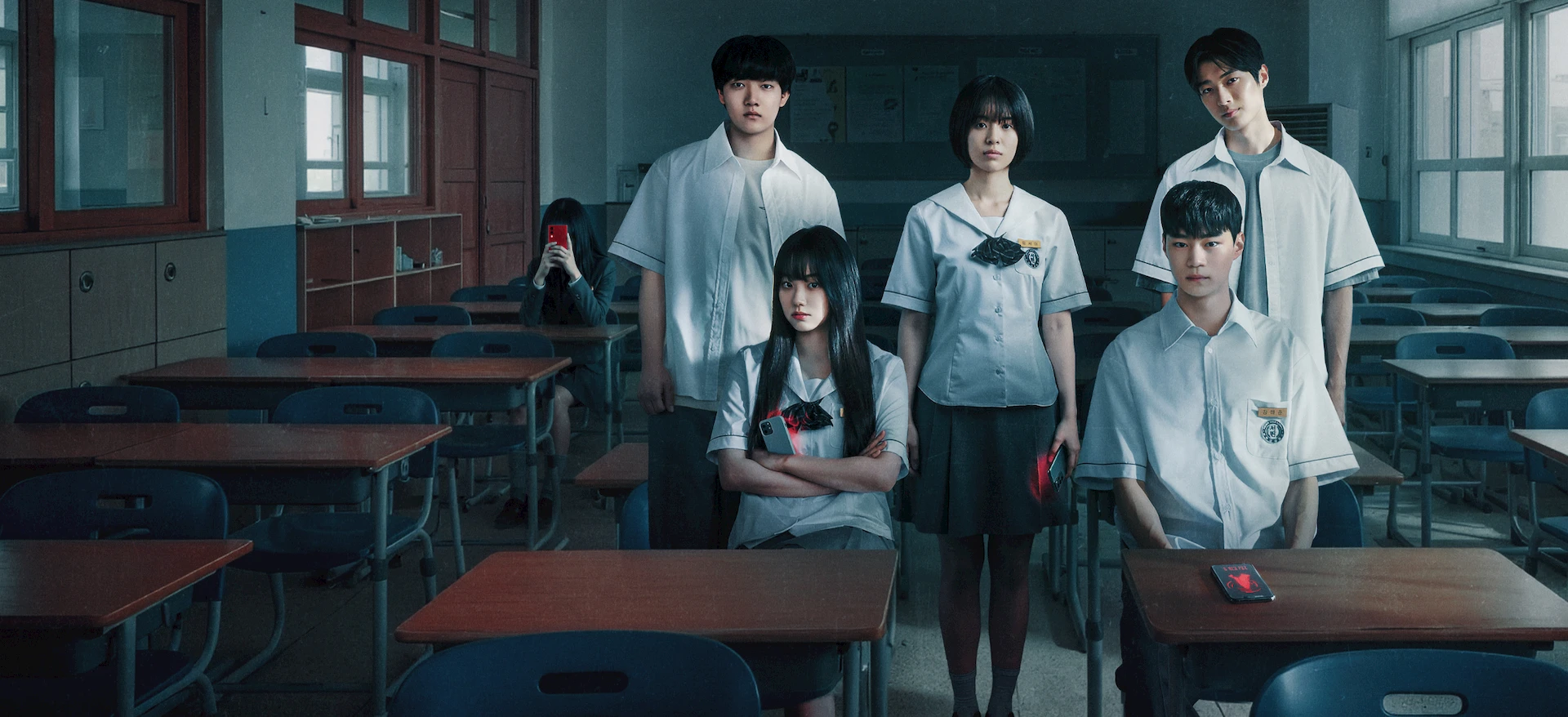
If wishes could kill is a Netflix k-drama that was released in 2026. The premise of the kdrama is based on an app called Girigo, which allows its users to fulfil one wish at the cost of their life. Five high school children get entangled in this app’s curse. They are met with the choice of falling under peer pressure, love, life, friendship, academic pressure, and ultimately trust.
The main character is Se-Ah, an inspiring long jump athlete, who has witnessed a lot of hardship in her life, and has finally achieved her ultimate dream of joining the national team. Along with her, we see her love interest Geon Woo, Haa Joon and Na Ri, the teenagers who get entangled in the trap of the curse. Now, after witnessing the whole show, I was left with a lot of questions on what really happened in the eight episodes, which were 44 minutes long.
Was it really Kwon Si Won who led the curse? Does it end with her getting perished? Why did the curse even start? What happened to her father? What was the relevance of the eye? let’s break it down from the root.
What if getting exactly what you wanted was the worst thing that could ever happen to you?
At first glance, the premise sounds extremely simple. A mysterious app grants wishes. The catch? Every wish comes with a deadly consequence. But as the series unfolds, it becomes clear that the app is merely the surface-level horror. The real horror lies in human desire, resentment, jealousy, regret, and the emotional scars people carry for years.
And that is precisely why the ending has left viewers arguing, theorizing, and dissecting every frame online. Here are my two cents:

The Real Villain Was Never the App
One of the smartest things the show does is refuse to make the cursed app the central antagonist.
Sure, the app grants wishes and at the cost of one’s life, but it never acts independently. It feeds on human weakness. Every major tragedy in the story stems from someone’s inability to let go; whether it is revenge, insecurity, guilt, or obsession. This idea becomes especially important when we examine Si-Won.
During the first half of the series, Si-Won feels like a tragic figure. By the end, however, she emerges as something far more unsettling. She is not simply a victim of the curse. She becomes its willing vessel.
The show’s flashbacks gradually reveal how her friendship with Hye-Ryung deteriorated. What began as admiration transformed into jealousy. What began as companionship turned into resentment.
Many initially interpreted Si-Won as misunderstood, but the ending forces us to reconsider everything. The curse did not create her bitterness. It merely amplified feelings that already existed.
That’s what makes her so frightening.
The Red String vs The White String
One of the most fascinating theories discussed revolves around the symbolism of the show’s recurring strings.
Throughout East Asian folklore, the red string often represents fate and destiny. In contrast, the white string is associated with purification, cleansing, and spiritual release.
The show appears to borrow heavily from this symbolism.
Se-Ah is consistently associated with hope, kindness, and emotional clarity. She represents the possibility of breaking cycles. Na-Ri, on the other hand, becomes entangled in darker and uglier emotions: envy, loneliness, anger, and eventually possession.
The red string hence proves to be not just a simple visual effect. It functions as a metaphor for spiritual contamination and emotional attachment.
It is also noticed that Se-Ah’s white thread never truly enters her body, whereas Na-Ri becomes deeply connected to the red thread and, by extension, the curse itself. Once you notice this contrast, the entire series starts feeling less like a ghost story and more like a battle between emotional corruption and emotional healing.
Did Si-Won Actually Die?
This is where things get really interesting.
The finale appears straightforward on the surface. The curse is confronted. The phone is destroyed. The nightmare should be over.
Except, immediately doubts get planted. Multiple viewers noticed that while the physical medium of the curse was destroyed, the spiritual essence may have survived.
And honestly?
I think they’re onto something.
The show repeatedly establishes that the curse isn’t tied to technology. Before smartphones, similar supernatural forces operated through talismans, objects, rituals, and other mediums.
The phone was simply the latest container.
Destroying the container does not necessarily destroy what lives inside it.
This interpretation suddenly makes the mid-credit scene far more disturbing. Rather than showing victory, the scene hints that the curse may have evolved.
The medium changed. The curse remained.
Bang-Wool’s Eye Might Be The Biggest Clue

One of the strangest details in the finale is Bang-Wool’s eye.
It would have been easy for the writers to treat it as a cool visual flourish. Instead, they give it enough emphasis to feel significant.
Many fans identified the eye as resembling “Youngahn”; a spiritual sight that allows someone to perceive entities from the spirit world.
If that’s true, then Bang-Wool’s transformation is not just cosmetic.
It suggests exposure. Connection. Contamination.
He has crossed a threshold and can now perceive what ordinary people cannot, which raises an unsettling possibility:
What if the curse was never defeated?
What if Bang-Wool’s new eye exists specifically because the spiritual threat still remains?
The show never confirms this outright, but it certainly wants us thinking about it.
Was Na-Ri Really Saved?

Another lingering question involves Na-Ri.
The series never gives viewers the kind of clean emotional closure many expected. In fact, some fans argue that the lack of a traditional death scene is deliberate. Television has trained us to expect certainty. We want a body, a funeral, a definitive ending.
If Wishes Could Kill refuses to provide that.
Instead, it leaves Na-Ri in a strange narrative limbo. And because of that ambiguity, theories exploded online.
Some believe she survived. Others believe her consciousness remains trapped between worlds. A few even suggest that the curse may still have some connection to her through the surviving spiritual thread.
Personally, I think the uncertainty is intentional.
The entire series is about consequences that refuse to disappear. Trauma doesn’t end because we want it to. Grief doesn’t conclude neatly.
Why should Na-Ri’s story?
The Hidden Cruelty Of Si-Won’s Final Wish

Perhaps the darkest interpretation is the idea that Si-Won’s final actions were not about survival at all.
They were about revenge. Even after death. Even after everything.
Several viewers suggested that Si-Won deliberately ensured Hye-Ryung would continue suffering. Not because she wanted power. Not because she wanted freedom. But because she could not let go of her hatred.
When viewed through this lens, the ending becomes tragic rather than triumphant.
The curse survives because bitterness survives. The supernatural horror is merely an extension of emotional horror.
And that idea is infinitely scarier than any ghost.
Why The Ending Works

I’ve seen a lot of viewers complain that the finale leaves too many questions unanswered. But I actually think that’s why it succeeds.
A lesser show would have spent ten minutes explaining every mystery.
Who survived.
Who died.
Where the curse went.
What happens next.
Instead, If Wishes Could Kill trusts its audience. The writers understand that uncertainty is far more powerful than certainty. By refusing to provide all the answers, they transform the audience into investigators. Days after finishing the show, viewers are still debating strings, curses, possession, spiritual symbolism, and hidden clues scattered throughout the finale.
Very few dramas manage to stay alive in people’s minds after the credits roll. This one does.
Final Cents
If Wishes Could Kill is not perfect. The mythology occasionally becomes convoluted. Some plot mechanics feel underexplained. The rules governing the curse aren’t always consistent.
But those flaws are easy to forgive because the show excels where it matters most.
It creates atmosphere.
It creates tension.
And most importantly, it creates discussion.
Beneath the supernatural horror lies a surprisingly human story about jealousy, guilt, loneliness, friendship, and the destructive power of unresolved emotions.
The app may grant wishes.
The spirits may haunt the living.
The red strings may bind souls together.
But the show’s real message is much simpler:
The most dangerous curse is the one we refuse to let go of.
And judging by that chilling ending, some curses don’t end when the phone breaks.
They just find a new way to survive.
Join our community of enthusiasts and be the first to know about our exciting new releases, upcoming events, and special promotions. Don't miss out on your chance to explore the universe with us!
Subscribe now and let the adventures begin!